Malta’s economic success story is undeniable. Our country has attracted unprecedented investment, welcomed thousands of new residents and established itself as a Mediterranean hub for business and innovation. Yet, as we celebrate these achievements, a fundamental question emerges: at what point does growth become counterproductive to the very quality of life that makes Malta attractive?
The Visible Signs of Strain
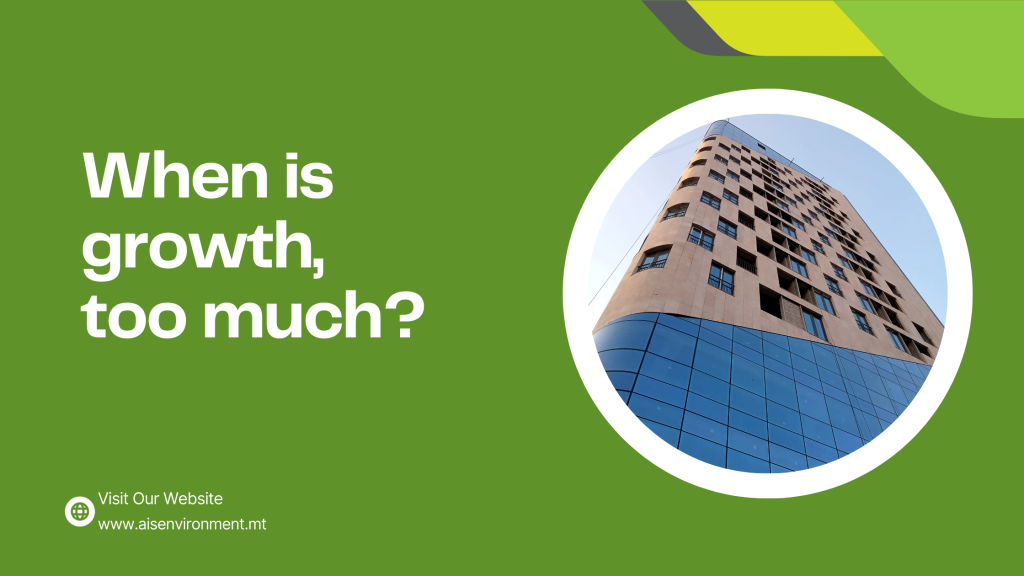
Anyone who has lived in Malta for more than a decade can feel the change. Morning commutes that once took minutes now stretch into lengthy crawls through congested streets. Finding parking has evolved from a minor inconvenience to a daily challenge. Construction cranes have become permanent fixtures in our skyline, transforming neighbourhoods at a pace that leaves longtime residents feeling displaced in their own communities.
These aren’t merely growing pains – they’re symptoms of a deeper question about the limits of what our small island nation can reasonably accommodate while maintaining the Mediterranean lifestyle and business environment that attracted growth in the first place.
More Than Just Traffic: The Ripple Effects
The impacts extend far beyond visible congestion. Malta’s infrastructure, from water and electricity networks to waste management systems, was designed for a different population scale. Each new resident, each additional business and each extra visitor adds pressure to systems that are already stretched thin.
Air quality shows measurable degradation, particularly during peak traffic hours. Noise pollution has transformed from an occasional annoyance to a constant backdrop in many residential areas. Our healthcare system, while robust, faces increasing demand from a growing population with diverse needs.
Perhaps most concerning is the effect on mental well-being. Islanders who once enjoyed short commutes, accessibility and a relaxed pace of life now find themselves adapting to stresses typically associated with much larger cities, but without the corresponding urban infrastructure and services.
The Economic Growth Paradox
Here lies the central paradox: Malta’s economic vitality depends on continued growth, yet unchecked growth threatens the very attributes that fuel our economic appeal. International businesses choose Malta not just for its regulatory framework and tax advantages, but for its quality of life and Mediterranean character. If growth erodes these qualities, we risk undermining our own competitive advantages.
The question isn’t whether growth is good or bad – clearly, economic development has brought tremendous benefits to Malta. Rather, it’s about understanding the optimal balance: the point where growth enhances rather than detracts from our collective prosperity and well-being.
A Call for Strategic Reflection
Malta stands at a crossroads. We can continue on our current trajectory and hope that infrastructure investment keeps pace with demand, or we can proactively examine what optimal growth looks like for our specific circumstances. This isn’t about halting development; it’s about ensuring that future growth serves our collective interests rather than overwhelming our capacity.
Businesses operating in Malta have a particular stake in this conversation. After all, they benefit from Malta’s advantages but also experience the challenges of operating in an increasingly strained environment. The businesses that thrive in Malta’s future will likely be those that recognise the connection between environmental responsibility and long-term competitiveness, understanding that preserving Malta’s appeal requires conscious effort from all stakeholders.
Looking Ahead
The conversation about Malta’s carrying capacity has become an urgent business and social imperative. The further we delay addressing these questions, the more these challenges become increasingly complex and the solutions more costly.
So what does responsible growth look like for Malta? How do we balance economic opportunity with livability? What role should businesses, government and society play in shaping our islands’ future? These questions deserve serious consideration from all stakeholders who have invested in Malta’s success.
The answers won’t be simple, but continuing on the current path carries far greater risks. Malta’s remarkable growth story deserves a thoughtful next chapter, one that ensures our country remains a place where business can flourish and people can thrive.
AIS Environment specialises in helping businesses navigate environmental challenges while maintaining operational excellence. Our comprehensive environmental management services support companies in minimising their environmental impact across Malta’s unique island setting.