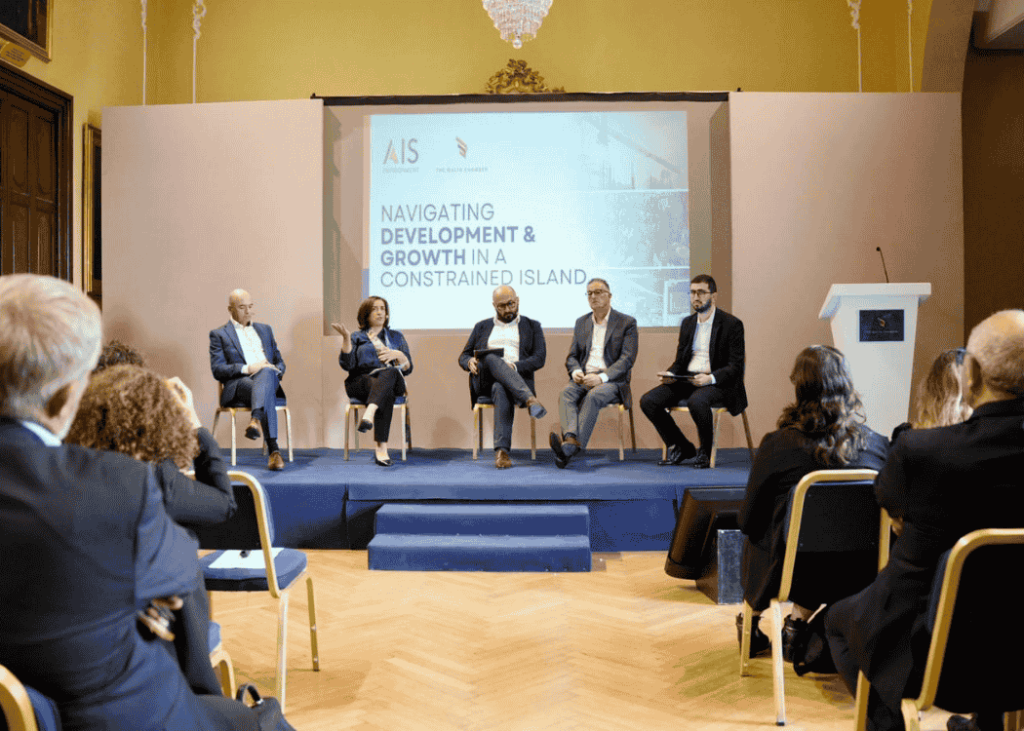
On 21 November 2025, AIS Environment, in collaboration with The Malta Chamber, convened Malta’s business community, policymakers, and sustainability experts for the national conference “Navigating Development and Growth in a Constrained Island.” The event addressed one of Malta’s most urgent questions: how can a small island with limited land, strained infrastructure, and escalating environmental pressures continue to prosper without undermining the wellbeing of future generations?
Malta today stands at a critical juncture. With rapid population growth, rising tourism numbers, intensifying urbanisation, and mounting strain on transport, waste, land use, and public services, businesses are increasingly struggling to operate within one of Europe’s most congested and spatially constrained environments. Traffic congestion, chronic noise levels, and deteriorating air quality have become daily realities, raising serious concerns about long-term competitiveness and quality of life. Against this backdrop, AIS Environment took a central role throughout the conference, steering the national dialogue with evidence-driven insights and strategic guidance.
A Call for Reflection: Address by AIS Group Founder Mario Schembri
In his opening address, AIS Group Founder Mario Schembri called for a collective reassessment of Malta’s economic trajectory. He noted that Malta’s recent economic boom—largely fuelled by attracting foreign labour—has pushed the island to record population levels, intensifying pressures on infrastructure and communities.
Mr Schembri emphasised that concerns should shift from cultural debates to the tangible strain caused by rapid development on roads, land, health, and national resilience. He posed a stark question: How many more people, buildings, vehicles, and infrastructural demands can Malta absorb before the system reaches breaking point?
His message was clear: economic growth is not the problem—growth without limits, planning, or capacity management is.
Understanding the Big Picture: Systems Perspective by Sacha Dunlop
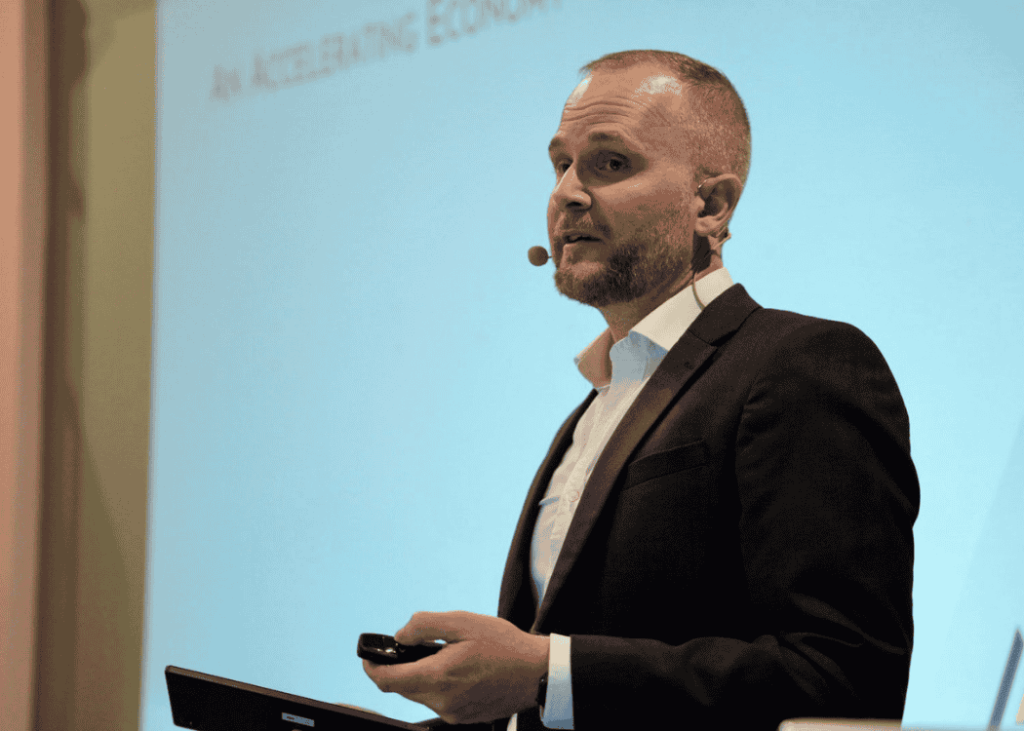
AIS Senior Manager Sacha Dunlop expanded the discussion through a systems-based interpretation of Malta’s spatial and sustainability challenges. Drawing on an extensive assessment carried out by AIS consultants—including data collection, expert interviews, and surveys among Malta Chamber members—Mr Dunlop highlighted that population expansion, rising tourism, inadequate infrastructure, and environmental degradation are deeply interlinked.
He pointed to evidence of sectors under “critical pressure,” including worsening traffic, chronic noise pollution, deteriorating air quality, and declining mental wellbeing. These pressures, he stressed, are not isolated problems—they reinforce one another, creating cumulative impacts that threaten long-term national resilience.
For Malta to safeguard wellbeing and economic stability, Dunlop argued, the country must adopt coordinated, capacity-led planning and ensure that environmental, social, migration, and education policies are aligned and enforced.
Presenting the Evidence: Insights from Senior Consultant Yasmin Schembri

AIS Senior Consultant Yasmin Schembri delivered one of the day’s most compelling data-driven presentations, outlining Malta’s demographic, environmental, and infrastructural outlook. She highlighted:
- rapid population growth mainly driven by net migration
- escalating pressure on land, energy, water, and waste systems
- persistent construction activity and land take-up
- worsening traffic congestion and environmental degradation
- increasing strain on healthcare and overall quality of life
She also presented long-term projections based on current trends. One concerning trajectory: if Malta’s vehicle stock continues to grow at the present rate, the island could have around 730,000 registered vehicles by 2050. Lining these vehicles side by side would occupy an area equivalent to all of Attard—or roughly 8% of Malta’s built-up space.
With 68% of surveyed Malta Chamber members stating that traffic is harming their business performance, Ms Schembri warned that Malta’s “addiction to cars” is becoming a direct economic risk.
She concluded by advocating a shift from a quantity-driven to a quality-driven economic model—one that achieves higher returns with fewer material and human inputs. Malta, she emphasised, must focus on an economy that is both prosperous and viable in the long term.
AIS Environment’s Vision for the Future
Across all its contributions, AIS Environment emphasised the need to:
- align development with Malta’s physical and environmental capacity
- implement policy frameworks that are predictable, enforceable, and consistent
- strengthen national resource resilience and infrastructure performance
- integrate sustainability into all business, land-use, and national planning decisions
- adopt long-term, evidence-based strategies that protect quality of life
AIS also supported broader calls made during the event for stronger enforcement, clearer KPIs tied to national strategies such as Vision 2050, and more disciplined implementation to bridge the gap between Malta’s ambitions and its realities.
Looking Ahead
Through its thought leadership, data-driven research, and systems-thinking approach, AIS Environment played a central role in guiding Malta’s national conversation toward a balanced model of development—one that protects the island’s uniqueness, boosts economic resilience, and prioritises the wellbeing of its people.
As Malta confronts the limits of its land, infrastructure, and environment, AIS Environment reaffirmed its commitment to supporting policymakers and the business sector in shaping a future that is resilient, responsible, and firmly grounded in evidence.
The message emerging from the conference was unmistakable: Malta can continue to grow—but only if it chooses growth that is planned, measured, and sustainable. AIS Environment will remain at the forefront, helping to ensure that Malta thrives without compromising the generations yet to come.